
INTRODUCTION
Cavities are overwhelmingly common and preventable and are the most common noncommunicable disease in childhood (National Center for Chronic Disease Prevention and Health Promotion; CDC Division of Oral Health 2024; Pitts et al. 2021). Untreated cavities and general poor oral health are associated with high health expenditures, worsening of chronic diseases like diabetes, and missed days at school and work that have been shown to affect future employment opportunities and economic security (National Institutes of Health 2021). Families who use public health insurance often struggle the most when attempting to address their children’s preventive oral health care needs—such as finding a dentist who practices near their home, accepts public insurance, sees pediatric patients, and has room in their schedule—all of which often depend on the zip code in which they live (National Center for Chronic Disease Prevention and Health Promotion and CDC Division of Oral Health 2024).
Like other social drivers of health, oral health care and specifically preventive dental care is impacted by structural racism, oral health policy, and insurance coverage policies, which limit what kinds of resources are available within different communities or zip codes and is largely related to who can afford to live there (Ford 2025; Hamed et al. 2022; Ramsoondar, Anawati, and Cameron 2023; Trent et al. 2019). At the same time, the issue of untreated cavities is largely related to limited access to preventive and primary dental care, particularly in lower income communities and communities that are majority Black and Brown, which often overlap with a lack of pediatric dentists in addition to a lack of grocery stores, pharmacies, and green space (Bailey, Feldman, and Bassett 2021; Locke et al. 2021; Shaker et al. 2023). The underlying reasons for why these communities are underresourced has been overwhelmingly and historically connected to systematic disinvestment and racism.
Like many health indicators—characteristics that describe the health of a population—the prevalence of cavities and untreated cavities exerts a disproportional burden on children from low-income households and communities and those who identify as Black and Brown (National Center for Chronic Disease Prevention and Health Promotion and CDC Division of Oral Health 2024). In low-income households, 17% of children have untreated cavities compared with only 6% of children in higher-income households (Bailey, Feldman, and Bassett 2021). Mexican American children and non-Hispanic Black children 2 to 5 years of age have twice as many cavities as same-aged non-Hispanic White children (National Center for Chronic Disease Prevention and Health Promotion and CDC Division of Oral Health 2024). These disparities in cavities and untreated cavities have persisted despite efforts driven by the U.S. Department of Health and Human Services (DHS) and reflected in its stated goals as reported in Healthy People 2020 (U.S. Department of Health and Human Services, Office of Disease Prevention and Health Promotion 2020), and national and local primary prevention initiatives including increasing fluoride in drinking water (Henshaw, Garcia, and Weintraub 2018).
Improving Pediatric Oral Care through Community Dental Health Coordinators
CDHC Role and Program
The American Dental Association (ADA) community dental health coordinator (CDHC) program was created to improve dental health access for pediatric patients in underresourced communities by addressing barriers for patients, advocating for preventive dental care, and using motivational interviewing to support families in finding and keeping dental health appointments (American Dental Association, n.d.). In 2021, we created a CDHC role and program at two outpatient medical centers located in low- income, underresourced neighborhoods in Washington, DC.
In common models of CDHC implementation, CDHCs refer patients internally to co-located dental providers within the same building and/or overall health system. However, our aim was to address the larger issue of access in the communities that our clinics serve, which required us to look beyond the limits of our co-located CDHC and dental providers since the pediatric dental providers for our system were already at capacity and there was still unmet need. In our case, the CDHC role shifted towards screening families for oral care needs and addressing unmet need through referrals to external community providers. As a result, we worked to increase pediatric oral health care access and utilization through supporting families by eliminating the burden of finding community dentists who met their needs and making appointments.
Since many young patients were not receiving oral health care, a primary role of our CDHC was to support families in getting to “intention to seek care” using motivational interviewing and education and then, correspondingly, providing logistical support to move families to “receipt of oral health care” (American Dental Association, n.d.). However, as our CDHC screened families for their oral health needs, during which they gathered and tracked data regarding which families had made and kept prior appointments and the challenges they faced in accessing care, we noted a discrepancy between our aims to help them access and receive oral health care and their experiences (American Dental Association, n.d.). This led us to launch a study to better understand what these families need most so that we could refine the CDHC role to best meet those needs.
CDHC Study and Findings
The objective of our CDHC study was to use quality improvement methodology to evaluate implementation of the CDHC model in our two hospital-affiliated pediatric practices located in two neighborhoods designated by the Health Resources and Services Administration (HRSA) as health professional shortage areas. To achieve this, a third-party facilitator was recruited to conduct focus groups with families who did and did not opt to participate in the CDHC program (Singletary & Associates 2023). Four focus groups were held—three for patient caregiver groups (n = 18) and one for providers (n = 12)—to gather their perspectives about the CDHC’s role. Inductive and deductive analyses of focus group transcripts were conducted using Dedoose (Dedoose Version 10, Cloud Application for Managing, Analyzing, and Presenting Qualitative and Mixed Method Research Data 2025) to identify themes.
The focus groups provided important feedback. The findings, which have been previously published (Weisz, de la Torre, and Tate 2025), showed that our medical providers overwhelmingly supported the CDHC program, as they felt families currently did not trust dental providers to manage their child’s oral health treatment and did not prioritize oral health. Further, our providers perceived the CDHC as the onsite expert, which gave them more confidence to engage with families about their specific oral health needs. However, patient family responses told a different story. Their responses indicated that families knew the importance of routine preventive dental care and not only intended to but actively sought out dental care. They reported that it was difficult to get dental appointments with community providers because of the limited number of offices, long wait times for appointments, and limited appointment times outside of traditional business hours. Parents did report that the CDHC made it easier to get appointments, but not all families wanted to wait for the CDHC’s help or simply preferred to make appointments themselves (Weisz, de la Torre, and Tate 2025). Overall, while the CDHC role provided the universal screening we had aimed for, it ultimately was not able to adequately address key barriers to accessing—and therefore receiving—preventive dental care for our pediatric patient population.
The focus group findings confirmed that patient families understood the importance of oral health care and were trying to make and keep dental appointments and stressed that the most significant barrier to dental care access was the lack of dental providers in their neighborhoods who (1) treat children, (2) accept Medicaid, and (3) have the capacity for patient volume. As our medical clinics are located in HRSA-designated shortage areas, likely due to decades of structural disinvestment, there was not adequate capacity within these communities to meet their dental health care needs; in fact, one dental practice closed during the study, further limiting oral health options for our patient families.
A vital observation of our CDHC was that few families needed support in getting to “intention to seek care,” which was a key assumption embedded in the conceptual model guiding the CDHC role. Further, most families declined help from the CDHC (American Dental Association, n.d.; Weisz, de la Torre, and Tate 2025). In more closely considering our study findings in this context, we identified two key issues that we needed to address:
-
Our CDHC program was not designed to focus on the correct priorities for our patient population. After learning that families already had strong intention to seek oral health care, we paused the program to re-evaluate the underlying goals of the role.
-
To best serve our patients and meet their oral health care needs, we needed a new conceptual model that accurately reflected facilitators for and barriers to access to and receipt of oral health care and better conceptualized the realities experienced by those in most need of oral care. Because programs like the CDHC are largely driven by conceptual models that do not adequately account for all barriers, we hypothesized that incorporating the lived experience of our patient population into a newly developed conceptual model would better inform our CDHC role and would be necessary to drive more effective future efforts to address oral health and health care disparities among this population.
Building on Existing Models of Oral Health Care Access to Serve Families Better
Existing conceptual models have and do incorporate socio-ecological perspectives in their attempts to explain persistent disparities in oral health in the U.S. For example, the American Academy of Pediatrics’ model developed by Dr. Fisher-Owens is often cited by pediatricians and pediatric dentists alike, as it emphasizes the many spheres of influence on pediatric oral health access, from the environmental to the microbial, while accounting for social drivers of health such as safety, medical and dental infrastructures, and access to care (Fisher-Owens et al. 2007). At the center of the AAP model is the interconnection of oral microbes, diet, and host teeth surrounded by child-, family- , and community- level influences, which include socio-economic status and health insurance coverage. This model does not overly emphasize one sphere of influence over another but uses overlapping spheres to suggest that these are all necessary to create the milieu of optimal oral health. The Peres conceptual model identifies structural (macro-economic policies, social class) and proximal (diet, inflammation) drivers that impact adult oral health, but it does so by relating them in a linear relationship, meaning that macro influences and individual behaviors are not weighted differently in the model but are viewed as augmenting each other (National Institutes of Health 2021). In contrast to the AAP’s intersectional model (Fisher-Owens et al. 2007), this model progresses from macro societal forces to individual behavior, which build on each other and include the food and beverage industry’s influence on oral health, such as advertising of sugar-sweetened beverages (National Institutes of Health 2021). Like the previous two models, Mejia et al. conceptualized inequities in oral health care through socio-ecological spheres. While this model also includes socio-ecological factors, what differentiates it from the other models is the inclusion of outcomes that they define as “intention to treat” and “receipt of oral health care.” (Mejia et al. 2008) This model presents these factors linearly and does not weigh them differently but conceptualizes them along a continuum. Further, because this model focuses on adults it does not include pediatric specific risk factors such as nighttime bottle use.
Using these previous conceptual models as a basis, in particular the Mejia model (Mejia et al. 2008) since it most closely reflects the logic underlying the aims of the ADA CDHC program (American Dental Association, n.d.), and guided by our focus group findings (Weisz, de la Torre, and Tate 2025), we aimed to develop a new working conceptual model of pediatric oral health care access and receipt of care that incorporates knowledge gained from our CDHC’s interactions with families.
METHODS
Model Development Team and Process
We formed a multidisciplinary study team that included pediatricians, pediatric dentists, community engagement experts, and a CDHC who lived and worked in the same community as our clinics. The study team met regularly throughout the CDHC implementation process to incorporate findings from our CDHC study into the model development process. The team created iterative versions of the new model, incorporating aspects of existing validated models and elements that reflected findings from our CDHC interviews and focus groups.
In the process of developing a new working model, the team engaged in in-depth discussions about the key differences between factors that may influence intention, access, and receipt of care and how a model might specifically differentiate and acknowledge these differences. Group discussions emphasized factors at the individual and environmental system levels that facilitate or inhibit these outcomes. Further, the group deliberated over how our model could emphasize risk markers and systems specific to pediatric care access, which differ in important ways from adult dental care systems and access.
RESULTS
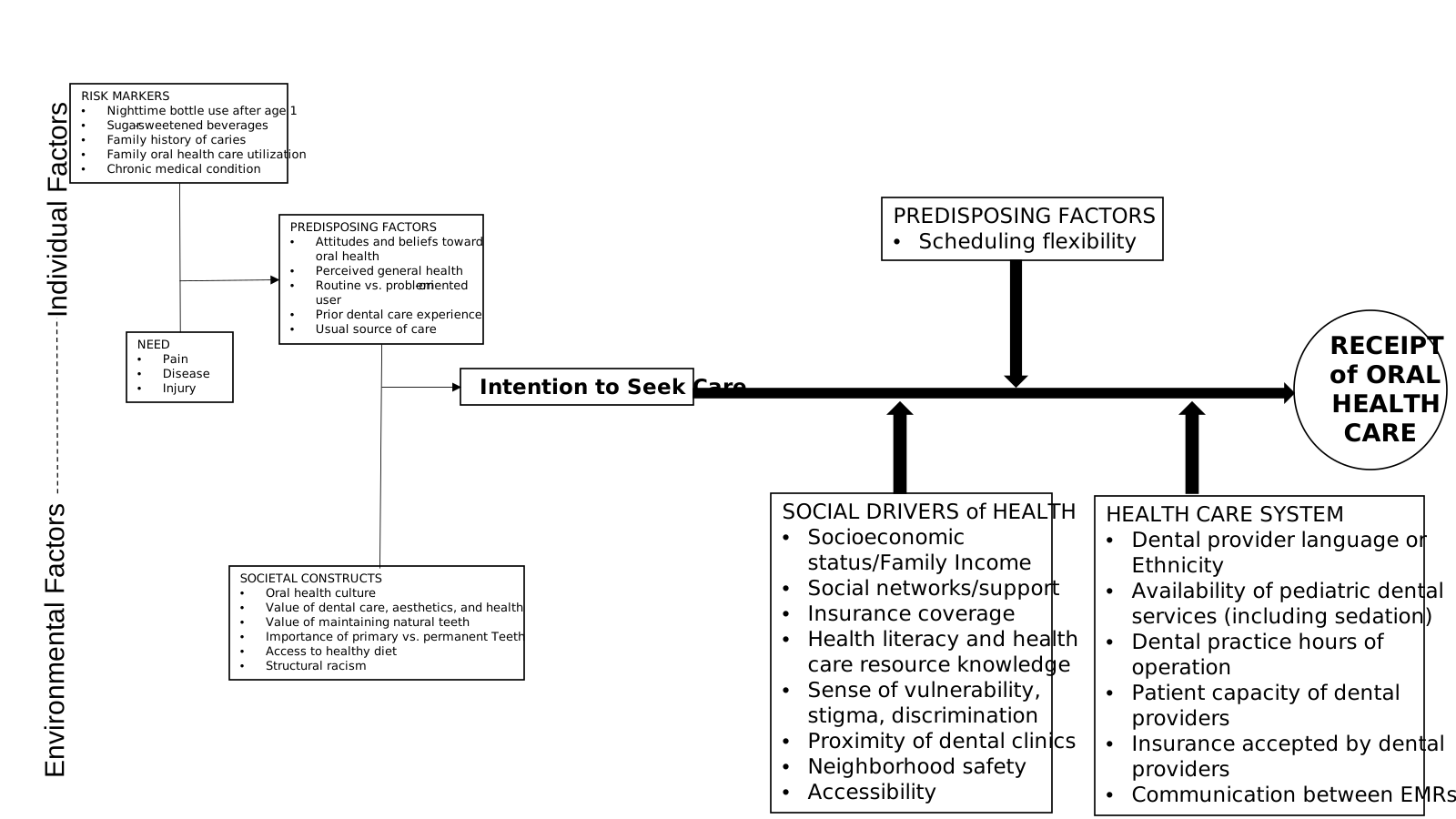
Our final model, shown in Figure 1, emphasizes the key finding from the focus groups that intention to seek care is not a primary barrier to accessing and receiving preventive oral health care. To emphasize that access to oral health care—which leads to actual receipt of oral care—in relation to intention to seek oral care, is weighted more heavily in the model, we chose to incorporate thicker lines, larger boxes, and larger fonts sizes for the factors related to receipt of oral care since these factors, which include social and structural drivers of adverse health and health system factors, were the most significant barriers reported by the families who participated in our study. Of note, our conceptual model reflects the actual receipt of oral health care as the endpoint; however, unrestricted access to oral health care implicitly precedes the receipt of care. The choice to pursue care is the last remaining step between access to and receipt of oral health care.

This new working model does still include intention to seek care since this may be an issue for some patients and families; if families do not intend to seek care, this should be identified, and interventions should be put in place to address it.
DISCUSSION
In existing conceptual models of oral health care access, there is an underlying assumption that the factors affecting “intention to seek care” and the factors affecting “access to care” and/or “receipt of care” are equally weighted. Based on the findings from our interview study, we now understand that families in our care are prioritizing pediatric oral health—they intend to seek care but are unable to access care for a range of reasons, leading to a decrease in receipt of oral health care. Initially, we suspected that the lack of access could be creating a feedback loop resulting in families not planning or intending to seek care, but the findings of our study showed the fallacy of this assumption.
Oral health should be prioritized on a systems-based level to improve health equity. As depicted in prior frameworks, oral health reflects the health of the individual, family, and the greater community (Weisz, de la Torre, and Tate 2025). A community health worker model, such as a CDHC, can serve important aims, but educating and motivating families is not enough—and may not be needed—as many families may already intend to seek care. However, if access to oral health care continues to be denied, what choice will families have?
Where we work in Washington, DC, Medicaid covers preventive pediatric dental services and insurance rates are high compared to other factors, but having insurance coverage does not necessarily translate into access to care, or otherwise stated, universal coverage does not translate to universal access to care (Singletary & Associates 2023), as was reflected in the comments of our study participants. Barriers still remain in access to pediatric oral health care and, therefore, the receipt of pediatric oral health care.
The existing capacity of the dental system is not able to meet the needs of pediatric patients in Washington, DC, especially in underresourced neighborhoods, where our medical clinics are located. The lack of pediatric oral health care access is a direct reflection of systemic disparities in oral health care availability. The neighborhoods in which the patients in our study live are home to only 12.5% of the oral health providers in the city, and other studies have demonstrated that families who self-identify as non-Hispanic Black live further from their dentists compared to other racial groups even when controlling for poverty (Liu et al. 2022). Our working conceptual model emphasizes that these social drivers of health and health system factors weigh more heavily on access to care. As a result of our findings, we do not recommended implementation of a CDHC program without dental partners who can guarantee capacity. In applying our model, we suggest that other clinics looking to add a CDHC should assess intention to seek care among their patient population early on and then determine the goals and objectives for the CDHC role to ensure appropriate focus on and support for the factors that families need most.
The National Institutes of Health’s 2021 report on Oral Health in America: Advances and Challenges (National Institutes of Health 2021) highlights oral health disparities. This landmark paper emphasizes that (1) oral health is an important indicator of overall health, (2) oral health is a health disparity, and (3) oral health disparities are in part due to barriers to oral health care access since oral health is financially separated from medical care (National Institutes of Health 2021). While it is true that dental insurance is separate from commercial health insurance and Medicaid plans that include oral health coverage vary widely by state, although there have been improvements (J. J. Crall and Vujicic 2020), oral health is still not prioritized by the health care system. Overall, while this NIH report did identify important issues related to oral health, actions on key barriers to oral care access have been limited to date and the report itself did not suggest or emphasize what these actions can or should be to achieve real change. We hope that our conceptual model, and the process involved in creating it, which included closely listening to the patients and families in our care, can inspire real change.
Understanding that differential receipt of oral health reflects systematic health disparities, which can also perpetuate future health disparities, is critical to framing the importance of oral health care advocacy. It is up to providers and health care systems to dismantle racist-based structures that decrease resource allocation to marginalized communities (Liu et al. 2022)—these structures not only create these barriers, but actively shift the focus away from structural barriers and toward individual behaviors, like lack of intention to seek care, as the reasons for poor oral health. Focus on individual behaviors then leads to investment in efforts to change those behaviors, effectively taking money and effort away from the work that is truly needed to improve access.
While our motivation to develop a new working model of pediatric oral health care access was driven by the realities of our patient families, we acknowledge that our study has several limitations. First, when conceptualizing oral health care access and receipt, it may be important to differentiate families who regularly seek medical care from those who do not. The participants in our focus groups were all patients who were already accessing medical care; they were recruited while accessing routine preventive care in their medical home. These families are likely different from those not seeking preventive medical care; and while many of the factors that impact their ability to access care are likely similar, this study did not engage with families outside the medical home. Although our conceptual model provides important context, there are still families who do not access medical or dental care who may need support in reaching intention to seek care. Second, the study population was homogeneous—nearly 100% self-identified as being non-Hispanic Black, living in urban neighborhoods close to their medical home, and having public health insurance; this population also had high rates of insurance coverage. Therefore, our findings might not be generalizable to other populations with different levels of insurance coverage and of different races and ethnicities. Future studies should attempt greater inclusion of all minoritized and/or marginalized populations. In addition, while lessons from this study can be generalized to some populations residing in other urban centers, this conceptual model should be studied in other populations and communities. Third, as this study progressed, a coalition of stakeholders often touted the high rates of dental insurance coverage (with broad income requirements and coverage for citizens and recently arrived immigrants), even though this did not translate to dental appointments for the study population (“District of Columbia. Department of Health Care Finance,” n.d.). This fact demonstrated that insurance coverage alone—without capacity to provide care and remove other barriers to accessing oral health care—would not lead to an increase in the receipt of oral health care. Fourth, while we incorporated data from our earlier qualitative work with families served by our CDHC, patients and families were not included in the model development process. Future work should include and explore patient family perceptions and input.
The Need for and Importance of Collaboration to Drive Advocacy for Oral Health
We believe that the impetus and work to create a new conceptual model for oral health care access is a fundamental form of advocacy—such that creating a model that better reflects what patient families experience helps to ensure that programs to help reduce health disparities among those families focus on the right factors and lead to more effective and cost-effective efforts to improve access to and receipt of oral health care. However, further advocacy is greatly needed. Despite some recent upstream policy efforts, they are not enough and indicate significant missed opportunities to broaden our lens and facilitate collaboration between dentists and pediatricians to include oral health in all our advocacy efforts.
Legislative advocacy should focus on increasing state health insurance coverage for oral health prevention and treatment services, especially for procedures that require pediatric sedation, as this is rarely covered by public insurance (Keels et al. 2021). Advocacy is also needed to increase the number of dentists who accept state health insurance plans and who have offices in underresourced neighborhoods with higher capacity for appointments; Centers for Medicaid and Medicare reimbursement rates for dental procedures will need to increase to offset the high cost of rent and salaries needed to operate new dental offices in these communities (Centers for Medicare & Medicaid Services 2011). Further, advocacy to increase the capabilities of mid-level dental providers as part of the dental team may be a key lever to achieving greater access (J. Crall 2010). Community stakeholders, including the state agencies that administer health insurance, should track who in their communities can access dentists and the ease of making those appointments; this data can then be used to support ongoing advocacy efforts.
As it stands, the CDHC role is and should continue to serve as an important model for collaboration between medicine and dentistry that prioritizes preventive oral health care. However, the CDHC model could be even better reimagined as an innovative opportunity to facilitate collaboration between a patient’s medical and dental homes, in which medical and oral care providers can benefit from the knowledge and support of one another while their patients and families can benefit from onsite care coordination for a range of preventive and complex dental health care needs. However, none of this can happen without increased access, which requires ongoing advocacy.
How can pediatricians help?
Pediatricians can pursue opportunities for partnership with pediatric dentists to better understand the landscape of oral health care in the communities where they work and where their patients live. They can also help hold policymakers accountable to these communities. Pediatricians also should advocate for the inclusion of oral health services when advocating for Medicaid expansion and reimbursement rates (Krol, Whelan, and Section on Oral Health 2023). Beyond insurance coverage, joint medical and dental advocacy can continue to be conducted on a variety of topics such as strengthening community water fluoridation, improving school policies on sugar-sweetened beverages, and identifying oral health care providers for adolescents with special oral health care needs. We also urge our fellow pediatricians to pursue pediatric clinician partnerships, whether through national organizations like the American Academy of Pediatrics and the American Academy of Pediatric Dentistry or local collaboratives.
We must work together and continue to listen to and learn from our patient families, to ensure more expanded and inclusive pediatric oral health care access to prevent the perpetuation of poor oral health including cavities and untreated cavities leading to oral health care disparities, as well as to all health disparities. This is critical for our patients and families and all those who depend on us for compassionate care.
Acknowledgments
The authors would like to thank Antonio Lambert for his contributions as Community Dental Health Coordinator.
Author Contributions
JW, DDLT, and AT conceptualized and designed the study, coordinated, and supervised data collection, and critically reviewed and revised the manuscript. All authors approved the final manuscript as submitted and agree to be accountable for all aspects of the work.
Funding
Support for the study was provided by the United States District Court for the District of Columbia, under Mathematica grant number 08744S06927. Mathematica provided oversight but did not conceptualize or design the study and did not analyze the data.
Abbreviations
CDHC, community dental health coordinator
Declaration of Competing Interests
None.