
INTRODUCTION
Pediatricians conduct well-child visits to positively shape and influence a child’s growth and development. During infant well-child visits, much of the visit is spent discussing nutrition—from feeding formula to introducing solid foods and promoting a healthy diet (Shilts et al. 2021). However, as children grow, their lives become more complex. Amongst the myriad of potential medical, social, and academic issues children may face as they get older, it becomes increasingly more difficult to dedicate adequate time to discuss nutrition during a short 15-minute, pediatric well-child visit (Daniels et al. 2012). Additionally, due to parents’ work demands and time constraints, and potentially limited nutritional knowledge and/or confidence in cooking, and the rising costs for healthy food, convenience often can supersede the nutritional quality of family meals (Bauer et al. 2012).
At the same time, the prevalence of obesity among U.S. children and adolescents has continued to increase and was estimated at 19.7% in March 2020. This translates into approximately 14.7 million youths aged 2–19 years who have a diagnosis of obesity (Stierman et al. 2021). Furthermore, the increasing prevalence of pediatric obesity directly impacts the rising prevalence of many other adverse health conditions that occur in childhood and continue on later in life including asthma, hypertension, sleep apnea, diabetes, and a range of mental health conditions (Lobstein et al. 2004; Hampl et al. 2023). In essence, to significantly reduce childhood morbidity and mortality today and in the future, we must find a way to prevent obesity—prevention is the key (Hampl et al. 2023).
In 2023, the American Academy of Pediatrics (AAP) released new obesity guidelines (Hampl et al. 2023), which focused on evaluation and treatment practices but provided limited guidance on prevention strategies. However, the new AAP guidelines did note that because children spend considerable time at school, this would be an ideal place for nutritional education (Hampl et al. 2023). Although various nutrition-related curricula geared for elementary school teachers exist and schools do provide some nutrition education, existing curricula often do not explain the pathophysiology of how nutrition affects the body and contributes to disease or translates that information into language and activities that elementary school students can understand and apply (Dunn et al. 2019). In addition, teachers are not often provided with detailed nutritional curricula nor do they typically receive specific training or staff development opportunities to support the creation and implementation of a nutrition curriculum (Murimi et al. 2007). A basic literature search of medical databases including PubMed and Ovid for physician-led nutrition education only yielded two published articles (Weiss et al. 2013; Friedland et al. 2011); however, both of these studies consisted of only a singular education session and assessed short-term knowledge improvements with a pre/post survey. Neither of these reports included a longitudinal nutrition curriculum for elementary school students. The interventions were both slideshow presentations and they did not include interactive food components or songs.
Given that pediatricians are a primary source of nutritional information starting at infancy, the rationale for continuing to provide nutritional information and guidance for elementary school-aged children is strong. However, the fact that elementary school-aged children generally see a pediatrician only once a year and the noted time limitations in the clinic setting are important barriers.
To overcome these barriers and address the lack of nutrition education in the school setting, we aimed to create and implement a novel physician-led, school-based longitudinal nutrition curriculum for elementary school students and evaluate its feasibility and impact with a long-term goal of obesity prevention and improved health and well-being among a student population at an urban public elementary school.
CASE DESCRIPTION
Curriculum Development
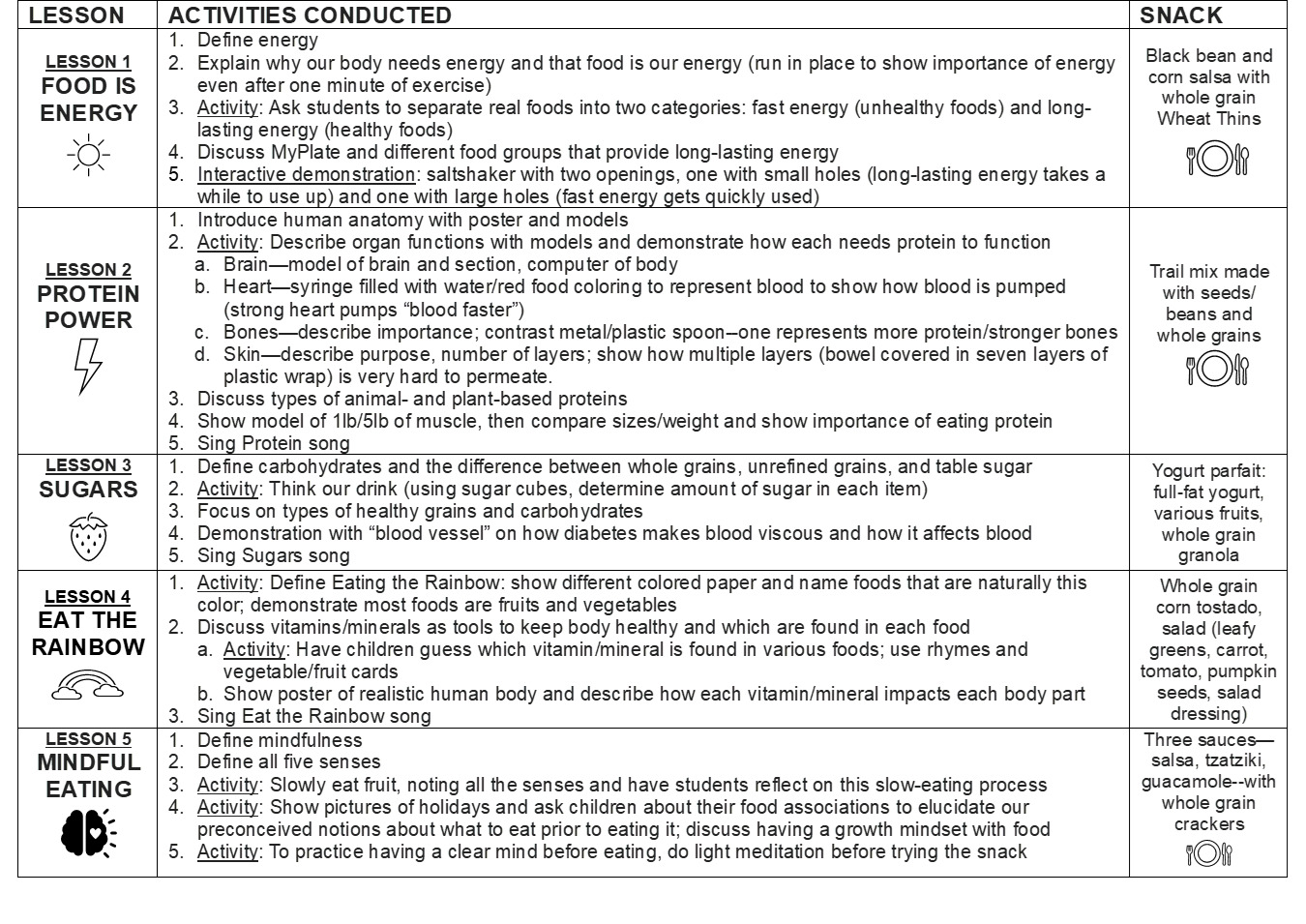
To create a developmentally-appropriate nutrition curriculum for elementary students, we looked to integrate elements of the U.S. Centers for Disease Control and Prevention (CDC) milestones (Zubler et al. 2022), and apply principles of the U.S. Department of Agriculture’s (USDA) MyPlate (U.S. Department of Agriculture and U.S Department of Health and Human Services 2020) and AAP guidelines (American Academy of Pediatrics 2020). Figure 1 shows the detailed lesson plans and content of this novel physician-led nutrition curriculum.
In preparation for curriculum development, the lead pediatrician (PR) attended various continuing medical education conferences on pediatric obesity, functional medicine, and lifestyle medicine to gain enhanced nutritional knowledge that built on education received during pediatric training. We sought out board-certified obesity medicine pediatricians and pediatric dietitians to review the content of the proposed curriculum for accuracy. One reviewer, who had previously worked as an elementary school teacher, provided additional feedback to help ensure the lesson plans followed standard elementary teaching principles and best practices (Forbes 2023). Applying elementary education guidelines, the curriculum was refined to follow ideal lesson length—less than 20 minutes—and include multisensory and kinetic learning elements that involved the use of highly interactive demonstrations and visual aids (Ornstein 1997; Dunn et al. 2010). Classes also were designed to be short to best incorporate them within the current school curriculum. Songs and rhymes were included to further engage students and reinforce the lessons beyond the classroom (Boshkoff 1991).
Repeated exposure to nutritious foods in a safe, trusted environment (such as a school setting) has been shown to improve positive nutrition attitudes and dietary habits (Lakkakula et al. 2010). However, it has also been shown that providing nutritious food alone without an educational component does not necessarily lead to increased consumption of nutritious foods (Harnack et al. 2012). Thus, it was determined that providing students with a snack that corresponded with the lesson plan was vital to immediately reinforce the nutrition principles being taught and expose children to nutritious foods they might otherwise not have the opportunity to try.
Notably, the final curriculum differed from other nutritional education sometimes included in standard elementary school curricula in some important ways. Because the information was provided by a pediatric medical expert, the lesson plans were specifically written to discuss dietary principles in relation to developmentally appropriate human pathophysiology. In addition, having the curriculum delivered by a physician can create an environment where students’ nutrition-related questions can be answered from a scientific basis and in real time using age-specific language and methods.
Logistics
The elementary school is located in an under-resourced urban community; and the student population at the time comprised 88% students who are ethnically minoritized and 66% students from low-income households. To receive approval to teach the nutrition lessons, the lead physician approached the administration of the elementary school where she already had an established relationship. The administrators were receptive to the idea but requested that she present the curriculum to the Chicago Public School Vendor Board, who subsequently approved it and she was set up as a vendor prior to dissemination.
All members of the teaching team including volunteers followed the protocols set by the Chicago Board of Education and the school itself, including background checks and compliance with school-entry processes prior to each lesson. Given the inclusion of food at the end of every nutrition lesson, a permission slip, including a comprehensive list of all foods that would be offered during the entire nutrition series, was created and distributed to parents/caregivers to notify them and request their approval/signature prior to the start of classes. Most (about 95%) parents gave approval for their children to participate, and only a few children (about 2%) were reported to have food allergies or religious reasons (i.e., classes during Ramadan) that limited their participation.
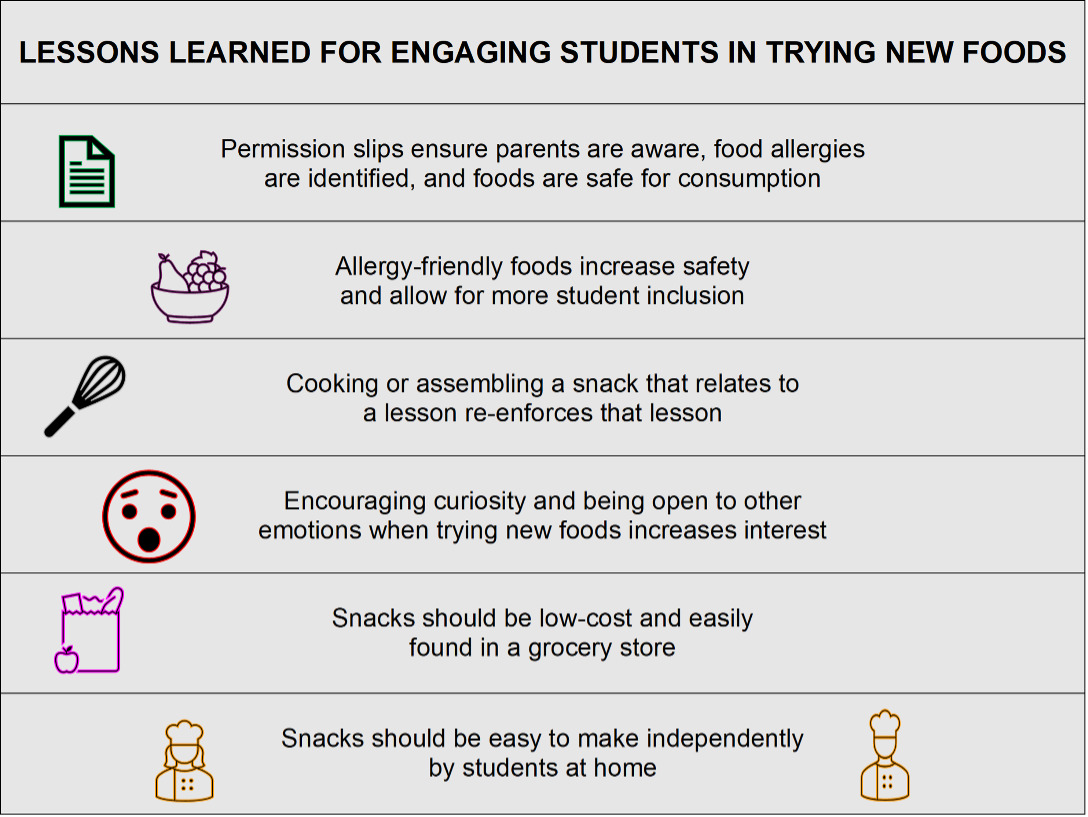
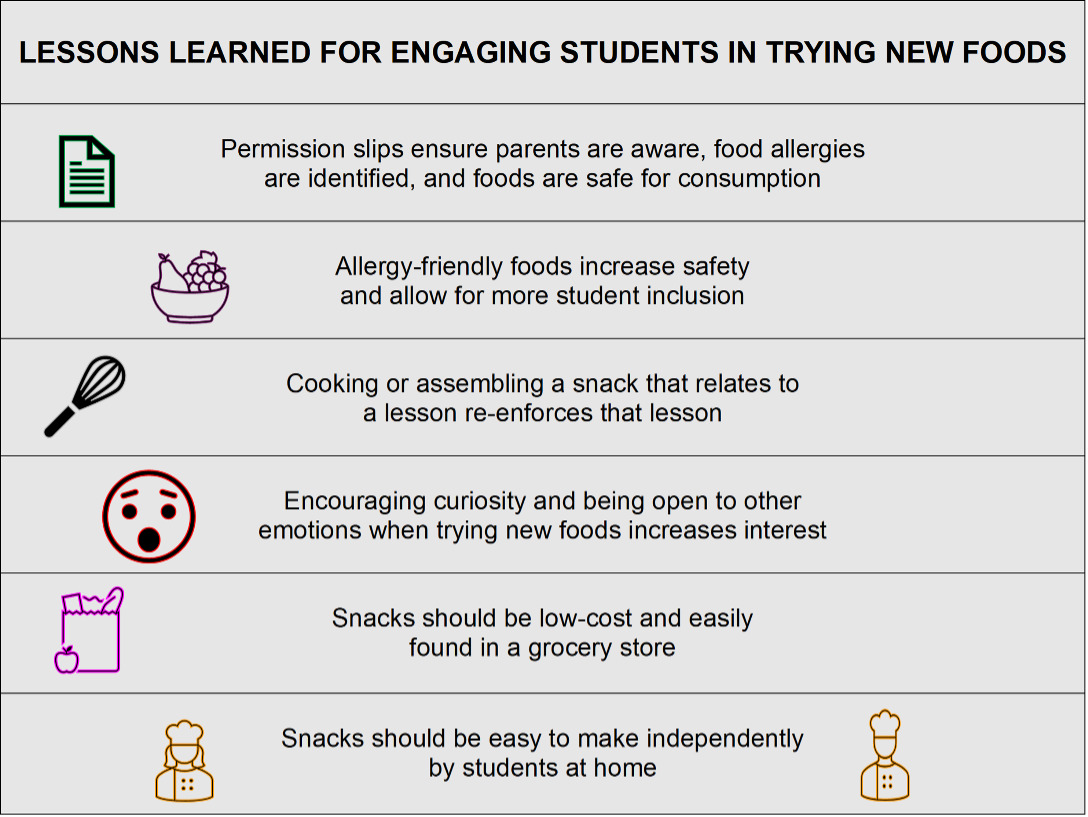
The processes for food selection, preparation, storage, and distribution were all carefully considered. Snacks were curated to ensure they were allergy-friendly (which allowed for the inclusion of most students and abided by school protocols), related to the lesson of the day, and low cost, nutritious, and easily accessible at local grocery stores. Foods used to assemble each snack were purchased by the lead physician during the week of the lesson. Perishable foods were washed and stored at appropriate temperatures in the lead physician’s home refrigerator to limit the risk of foodborne illness before they were brought to the school for preparation on the day of the lesson. The snacks were prepared onsite either by the lead physician prior to the class or by the nutrition interns while the lead physician conducted class. Gloves (for food preparation and distribution), utensils, and plates for the snack were available for use from the regular classroom supply. Snack preparation did not require significant space and could be completed in the classroom. The school kitchen and food service staff were not involved in the storage or preparation of the snacks as no snacks required cooking. Even the assembly of the snacks was considered and designed to be developmentally appropriate so that an elementary age child could assemble them independently at home.
Ethical approval was not sought for this study because it was exempt from Institutional Review Board (IRB) review under Northwestern Feinberg School of Medicine Policy, as the activity did not meet the federal definition of research on living human subjects and did not involve identifiable human data.
Curriculum Implementation
The nutrition curriculum was conducted in an iterative fashion over three years, from 2022 to 2025, at an urban, public elementary school in Chicago, Illinois.
The five, 20-minute nutrition classes (Figure 1) were administered bimonthly between September and April to three first-grade and three second-grade classes during the first academic year, and four first-grade classes in academic years two and three, reaching around 150 students in total. The lead physician conducted the classes all three years, supported by pediatric residents who were fulfilling their community and advocacy rotations and occasionally by medical students and nutritionists in training. The school’s regular classroom teachers were present in the classroom for all five nutrition lessons and participated in the lessons and assisted with classroom management as needed.
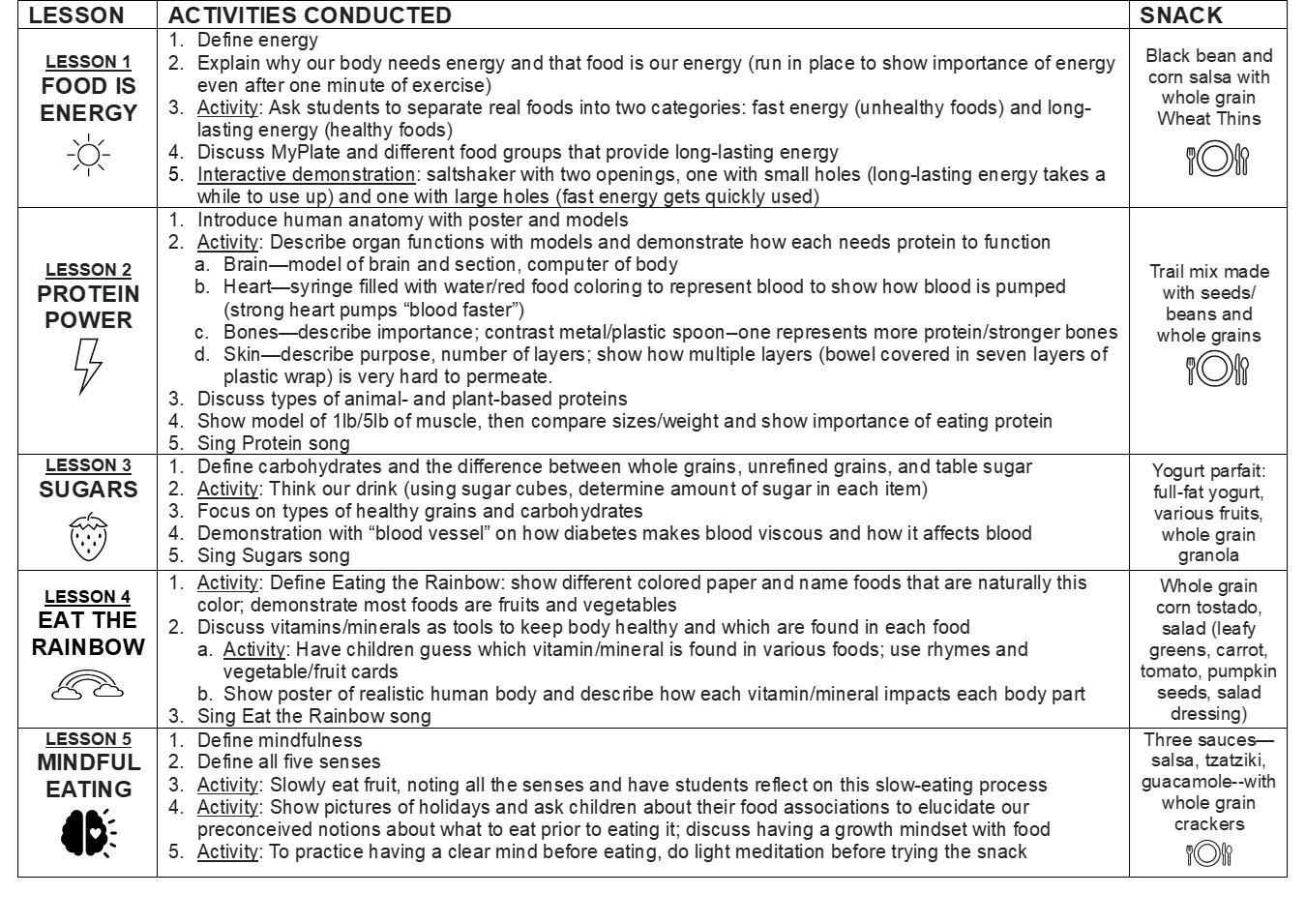
Lessons included the use of visual aids such as human anatomy posters, and simple, understandable demonstrations such as using medical syringes filled with red-colored water to represent how the heart pumps blood, sugar cubes for the lesson on the effect of sugar on the body, muscle models, and a poster correlating various vitamin and minerals with the functions of different organs of the human body.
Snacks were distributed immediately after the nutrition lessons within the classroom by the nutrition interns or medical students. Based on lessons learned while implementing the nutrition curriculum in a public elementary school, Figure 2 provides a summary of tips for selecting, preparing, and offering snacks in the school setting to encourage nutritious eating and healthy diets.
Beyond the Classroom
In the second year of the curriculum, handouts including recipes for the snacks provided in class were sent home to parents to help reinforce the nutrition lessons. The intent was that this would encourage parents and caregivers to discuss what their children learned in class with their child and perhaps attempt to make the snacks or something similar at home. In the third year, each classroom teacher was given a colorful MyPlate (U.S. Department of Agriculture and U.S Department of Health and Human Services 2020) nutrition-themed poster to hang in their classroom or elsewhere within the school where students would see them repeatedly during the school day to help reinforce teaching outside of the nutrition classes.
Outcomes
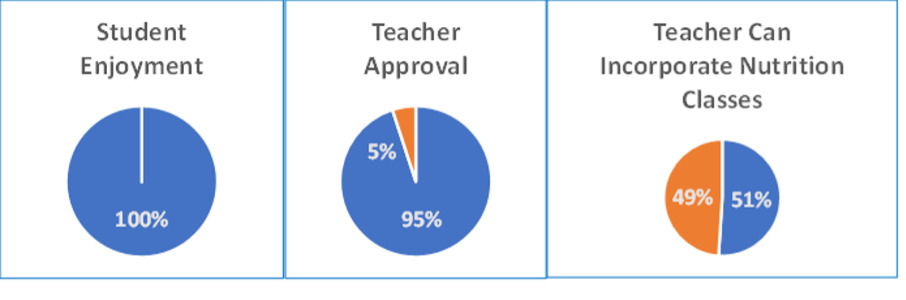
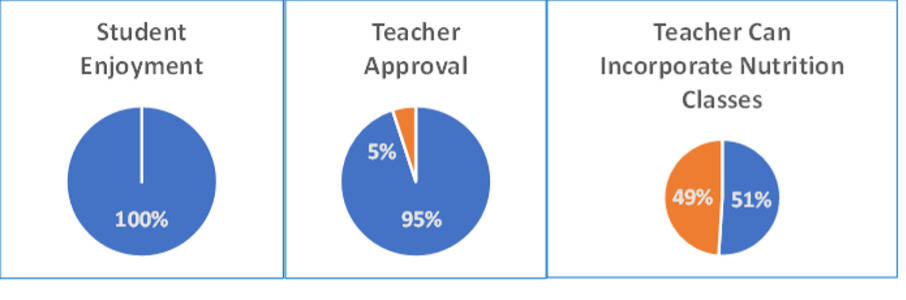
Following each of the five nutrition classes, surveys were distributed to each of the six participating classroom teachers (n=30) to assess their perception of student enjoyment, teacher approval, and ability to incorporate nutrition education in the classroom. QR codes were provided to ensure anonymous responses. Over 90% (28/30) of surveys were completed. All (100%) respondents reported that their students enjoyed the classes and desired ongoing participation; and the vast majority (95%) felt nutrition education should be provided on a regular basis; however, only 51% felt they could currently incorporate monthly nutrition education into their classroom curriculum. Figure 3 illustrates these survey findings.
At the end of year one, to better understand the feasibility and impact of the overall nutrition curriculum, we distributed surveys to assess teachers’ attitudes about the lessons. That survey consisted of multiple choice, Likert-scale, and open-ended questions. Responses to the open-ended questions were used to improve lesson implementation. For example, one teacher recommended using circle time on the carpet to improve students’ attention and engagement. Teachers also recommended using visual aids located at the front of the classroom (instead of passing them around) to limit distractions. These changes were implemented the following year.
During year two, we distributed surveys to parents of students who participated in the curriculum to assess eating behaviors at home; however, responses were not analyzed due to an extremely low completion rate (2%). After year two, the lead physician met with the classroom teachers for a roundtable discussion about the evolving curriculum. Several teachers characterized the nutrition classes as enjoyable. They reported feeling the class filled an educational gap and exposed children to nutritious foods that they otherwise would not have opportunities to try. Some teachers also expressed that by being present during the sessions they were learning simple ways to explain nutrition concepts and could incorporate them into their own lessons. While teachers shared that students often inquired about when they could attend nutrition class again or remarked that they were following the nutrition principles, they also expressed that it was hard to know how much information the students retained and asked for an assessment that could evaluate retention.
In year three, to address teachers’ concerns about retention, we co-created and distributed a developmentally appropriate nutrition knowledge and attitudes assessment. An example of a knowledge-related question from the assessment is: “Healthy foods (fruits, vegetables, whole grains) have long-lasting energy to fuel our body all day long,” with a true/false choice response. Another question to assess attitudes about nutrition was: “I like to eat fruits and vegetables” with multiple-choice responses of “No,” “Getting used to it,” and “Yes.”
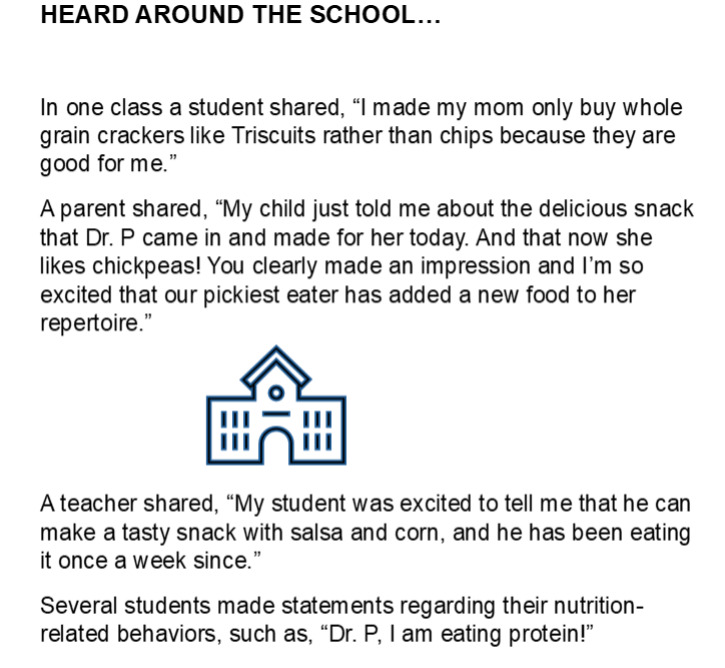
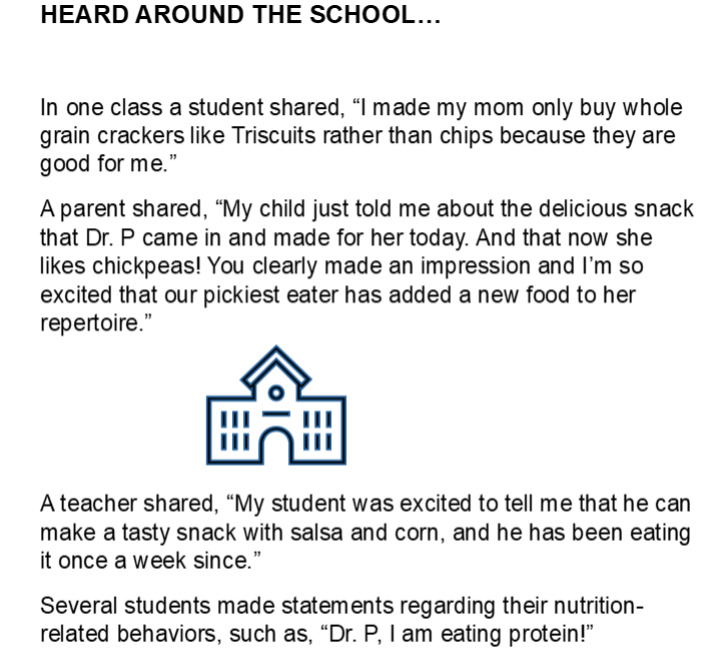
After participating in all five nutrition classes, some students informally shared some of their thoughts and behavior changes with the lead physician and their teachers (Figure 4). Anecdotally, students were often heard referring to the lead physician as the “nutrition lady,” and giving her a hug when they saw her at school. Students also could be seen and heard singing the nutrition songs during the regular school day, and their classroom teachers reported that they accepted student requests to play recordings of the songs in their classrooms outside of nutrition class time. Teachers recommended pre-recording the songs on video and having printouts of the lyrics available during and outside of class time so that students could follow along and participate more; and this was implemented in year three.
At the end of year three, another informal discussion took place between the lead physician and classroom teachers. Teachers recommended some modifications to the knowledge and attitudes assessment. An example of a proposed change included adding images to answer choices to improve student comprehension (i.e., adding a picture of milk and cheese next to an answer choice including the word “dairy”). Lastly, while teachers requested more time for the nutrition lessons, this was not determined to be feasible given time constraints during the school day.
At the end of the three-year curriculum implementation, the teaching team did an inventory of what went well and why. Table 1 below summarizes some of the best practices for developing and implementing a nutrition curriculum in an elementary education setting based on our evaluation data and feedback from classroom teachers.
DISCUSSION
This five-session, interactive and developmentally appropriate nutrition curriculum exposed nearly 100 elementary school students to nutrition education and healthy foods and provided their teachers and parents with nutrition education to reinforce principles outside of the original classes. We showed that this combination of a short, simple, low-cost nutrition education model that integrates a shared food component can positively impact attitudes and behaviors associated with healthy eating—a necessity if we are to overcome the convenience of unhealthy food choices and increasing childhood obesity rates. While school boards often argue that there is not enough time to implement nutrition education in an already packed curriculum, this nutrition curriculum took only twenty minutes to deliver on five different occasions (totaling less than two hours per school year) and yielded positive outcomes. This reinforces that it is not the length of the class itself, but the repeated exposure and engagement that is necessary.
The positive impact of having the same instructor deliver this longitudinal program was clear. By consistently returning to teach each class, the lead physician established rapport with students, teachers, and parents, thereby not only sharing accurate and accessible health information but reinforcing positive attitudes about healthy eating. It was not surprising then when the lead physician returned to visit the school in subsequent years, that the students who completed her classes approached her with hugs. Their anecdotal feedback emphasizes how establishing relationships with students and parents can positively impact how new information is received and retained; in this case, addressing students’ nutritional knowledge and attitudes will hopefully lead to new and sustained healthy nutritional behaviors and food choices. Further, the rapport built between the school and medical personnel suggests that more partnerships between medical institutions and schools should be forged to improve the health of children. These connections also may have reciprocal benefits such as lessening child anxiety when seeing a doctor, etc.
In addition, the curriculum established a liaison and supported dialogue between pediatric physicians, trainees, and elementary school teachers, which is important not only for nutrition education but for many health-related topics that impact young children, such as school safety and infection prevention. This was evidenced by increasing teacher participation during the nutrition classes. Some teachers even began incorporating nutrition activity sheets from MyPlate to reinforce learning in their own classes.
Anecdotal feedback from the pediatric residents participating in a community advocacy rotation showed that they too benefited from their participation in the delivery of the curriculum. In evaluating their advocacy rotation, these physicians in training noted that being in schools, witnessing live teaching, gaining understanding of teachers’ perspectives, and interacting with children in their own natural environment were all advantages of participating in the rotation. One resident noted that this advocacy project was one of the most impactful of the rotation, “To be able to see healthy kids and also the difficulty of teachers was eye opening.” They also shared that this experience improved their understanding of their patient populations’ general knowledge about nutrition at this age and what they are exposed to, which can help with discussions during well child visits. At a time in which the physician-patient relationship is strained (Drossman and Ruddy 2020), rapport between physicians and their patients is absolutely needed. Continued involvement of residents in school-based advocacy work may further foster long-term relationships between pediatricians and schools and may lead to long-term advocacy careers.
Challenges
While there is much to celebrate about this work, this novel physician-led nutritional education curriculum faced and addressed several challenges. Given the physical space limitations of this urban public-school setting, it was necessary to move the nutrition lessons from classroom-to-classroom multiple times a day to deliver the curriculum. This required that demonstrations be easy to set up and take down; however, while this was feasible it took away some of the limited time available for each class and created a slightly more chaotic environment. Another challenge, though a good one to have, was that since the curriculum often reached more than 100 students in a day, it was sometimes difficult to procure and store the large amount of fresh fruit and vegetables needed for the snack. This also meant that the assembly of so many snacks required extra hands; our medical students/residents and nutrition interns helped when they were available. Due to the short-allotted time for each class and lack of kitchen access, the snack options we were able to offer were limited since they could not include foods that needed to be cooked or baked. While kitchen access may be possible in some school settings, additional safeguards would need to be put in place.
Involving parents in the nutrition curriculum was also challenging, largely due to their time demands. As noted earlier, in year two we attempted to survey parents of students who participated in the curriculum to assess student behavior at home, but the responses were not analyzed due to an extremely low completion rate (2%). Some potential reasons for this could be competing paperwork sent home by the school, not receiving the survey, uncertainty regarding how to respond to the questions, and time constraints. As a result, it is unknown whether the nutrition classes resulted in nutrition-related conversations or behavior changes at home. Overall, it was suspected that many students relied on convenient and generally unhealthy foods with limited nutritional value outside of school time. However, while we do not have survey data to support either aspect, parents’ impressions of the curriculum’s impact on their children as shared through their anecdotal accounts tell an important story of engagement and interest.
Although the snacks provided were comprised of budget-friendly foods, parents and caregivers may still face challenges in obtaining and preparing these foods to provide at home. Limited access to grocery stores, financial constraints, time limitations, and knowledge gaps regarding healthy nutrition and cooking, as well as family and cultural traditions and beliefs about what foods are appropriate for children have been reported as contributors to challenges in adopting nutrition-related behavior changes in the home (Thorndike et al. 2022). While we acknowledge their role, this curriculum does not address the larger social and structural barriers experienced by many families that directly impact their ability to purchase, prepare, and consume healthy foods. Stronger and expanded governmental programs (such as expansion of food assistance programs like Supplemental Nutrition Assistance Program (SNAP)) and campaigns are needed to address these barriers.
From a curriculum development perspective, we encountered some challenges in our collaborations with classroom teachers, particularly in gathering feedback and involving them in the development of the assessments. However, we acknowledge that these challenges were largely related to their already demanding workload, leaving minimal time for additional meetings or discussions. We learned that it was best to solicit feedback at the end of the school year or immediately following each lesson. Classroom teachers, as we witnessed at this school and understand in general, do far more than required and with far fewer resources than they need. One teaching philosophy that is promoted at this school that may have contributed to the success of our nutrition curriculum is the emphasis on a growth mindset, meaning that teachers encourage children to try new things and push themselves beyond their comfort zone.
In our model, the lead physician and support team volunteered their time to develop and conduct the nutrition curriculum. It may be challenging to find similar physicians who are able to do this in a volunteer capacity unless the role is developed to meet certain job responsibilities (such as involving advocacy or education efforts) or who are interested in dedicating time to do this work. Additionally, the physicians must have or acquire requisite knowledge and skills to teach nutrition in an elementary school setting. However, pediatricians are a unique group of stakeholders who may have the interest and ability to do this well.
Funding
Overall, implementing our nutrition curriculum was relatively inexpensive, but it did require a small budget that may present challenges for other groups. In its first year, the nutrition curriculum was personally funded by the lead physician. In the second and third years, the program was funded by community health grants that were awarded after an application process through the Patrick M. Magoon Institute for Healthy Communities at the Ann & Robert H. Lurie Children’s Hospital of Chicago, where the lead physician and team are based. Most of the funds were used to purchase healthy snacks including fresh fruit and vegetables distributed at the end of each class. The remaining funds were used to purchase visual aids and materials to support the interactive demonstrations. The total cost of teaching the five nutrition classes was less than $600. The physicians, medical students, and nutrition interns volunteered their time and were not compensated.
Our funding model (i.e., self-funding and community health grants) does not provide long-term sustainability and any funding from the school itself would likely be limited given already tight budget constraints. For larger scale implementation, securing reliable and sustained funding would be challenging but necessary.
Next Steps and Implications for Further Advocacy
Integrating physician expertise into a school’s health-related curriculum, similar to having teachers within the health care system, strengthens relationships between students, parents, teachers, and healthcare providers and allows for new opportunities to positively impact knowledge and behaviors, which are difficult to accomplish during a clinic visit. Expanding this work to include more schools or classrooms could reach more students. Ideally, an effective nutrition curriculum within the public school system could be delivered across multiple school years during which students would build upon lessons learned from previous years, as they do in other subject areas. Additionally, schools would be able to offer high-quality, nutritious meals that reinforce this education.
As an extension of this project, the lead physician mentored a medical student advocacy group to deliver a modified version of the curriculum to a group of ethnically minoritized children and their parents in a community-based setting. In this setting, a kitchen was available and utilized during the curriculum, which allowed for the preparation of more complex snacks that involved cutting, cooking, and baking. This project provided more evidence that the curriculum can be replicated and easily implemented for various audiences. It also yielded more suggestions of other ways the curriculum could be modified, including adapting the snack to fit facility resources, adjusting content and activities for children/students of different ages, and, if there is more time for lesson delivery, involving children in preparing the snacks given there is evidence that child involvement in food preparation is associated with a higher quality diet (Quelly 2019).
Overall, this work provided some evidence that a nutrition education intervention does not necessarily need to be intensive to achieve its goals. Through brief lessons and repeated exposure to healthy foods, children may start to prefer and request new foods and thus influence what groceries their parents purchase, which could ultimately result in improved nutrition among the entire family and may help prevent obesity across generations. Providing a safe space for children to try and test new foods without fear of judgement or punishment may help expand their palates and foster more positive attitudes toward healthier foods. As health care providers, parents, and teachers, we cannot only ask these things of our children, but we too need to remain curious, willing, and open to trying something new.
To reverse the obesity epidemic, the causes must be understood and addressed at various levels. Given the multifactorial causes of childhood obesity, future AAP guidelines should include a focus on prevention and suggest evidence-based ways to address obesity beyond the clinic. Current AAP guidelines only suggest strategies that can be used within a clinical visit but should provide guidelines for teachers to incorporate school-based learning, so that all children can be impacted, not just the ones who regularly go to the doctor. Further, most medical students do not receive nutrition training during medical school or residency—this should change since many health conditions are caused and/or worsened by a poor diet.
This model of a school-based, physician-led nutrition curriculum may contribute to a multifaceted approach to childhood obesity prevention, as an effective and engaging way to impart basic nutrition concepts and strategies to young children and their families. It also highlights that interventions can be acts of advocacy, and that small, short, single-site interventions have value and should be shared.
Acknowledgements
The authors acknowledge the support and mentorship of Helen Binns, MD and Kareen Sheehan, MD, MPH.
Author Contributions
PR developed the curriculum; PR and MW presented the curriculum, analyzed and interpreted the data, drafted and edited the manuscript for important intellectual content, and are accountable for all aspects of the work.
Funding/Support
This project was supported by the lead physician and a Community Health Grant through the Patrick M. Magoon Institute for Healthy Communities at Ann & Robert H. Lurie Children’s Hospital of Chicago.
Conflict of Interest statement
The authors declare that they have no relevant or material financial interests that relate to the research described in this paper.
Abbreviations
AAP, American Academy of Pediatrics; CDC, Centers for Disease Control and Prevention; IRB, Institutional Review Board; SNAP, Supplemental Nutrition Assistance Program; USDA, United States Department of Agriculture.